College Basketball Defensive Playbook

Defending the Dribble Drive

Build an impenetrable wall. Interactive breakdowns of how to stop dribble penetration, rotate on help, and recover — the backbone of elite college defense.

The Wall-Up: On-Ball Drive Defense

Stopping the ball starts with your stance. Step through the five phases of elite on-ball drive defense.
Ball Handler
Defender
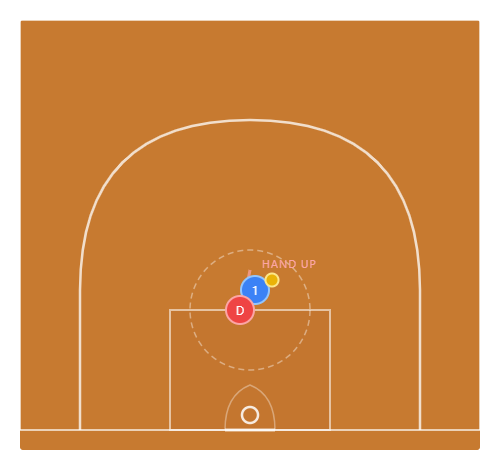
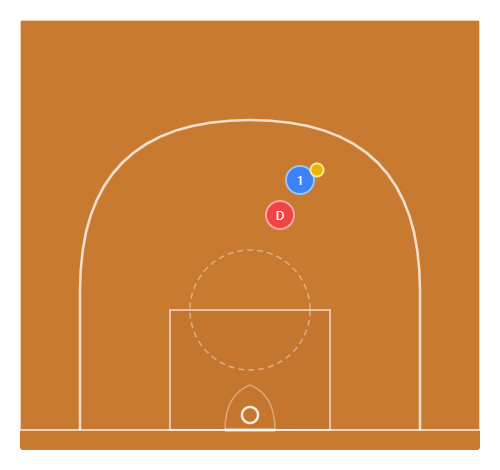
Step 1 — Stance: Start in a low, wide defensive stance. Feet wider than shoulders, butt down, hands active. Weight on the balls of your feet — ready to react in any direction.
Ball Handler
Defender
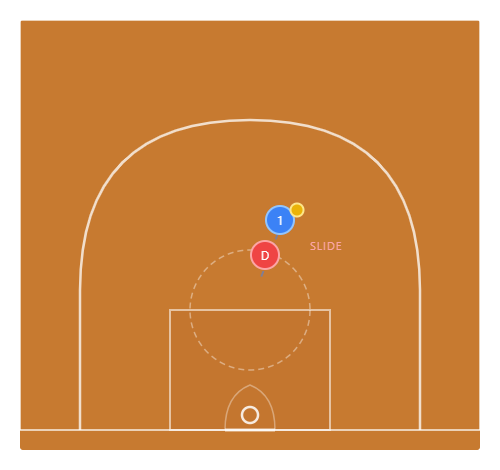
Step 2 — Slide & Mirror: As the ball handler attacks, slide your feet laterally. Never cross your feet. Keep your chest centered on the ball — if the ball gets past your lead hip, you’re beaten.
Ball Handler
Defender
Step 3 — Influence Direction: Use your body angle to take away the middle of the floor. Force the driver toward the sideline or baseline where help is waiting. Your lead foot dictates where they can go.
Ball Handler
Defender
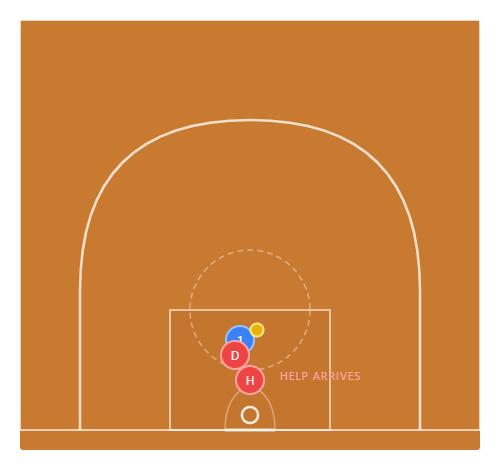
Step 4 — Funnel to Help: Your job isn’t to get a steal — it’s to slow the driver and funnel them into the waiting help defender. Contain and channel. The help side does the rest.
Ball Handler
Defender
Step 5 — Wall Up: Both defenders go vertical — hands straight up, chest square, feet set. This is the “wall.” The driver sees two bodies and no space. Force the tough floater or the kick-out to a contested shooter.

Nose on the Ball

Your nose should stay aligned with the basketball. If the ball gets past your nose, you've already been beaten. Slide, don't reach.

Low & Wide

Hips below shoulders, feet wider than shoulders. A high stance = getting blown by. You can't change direction quickly if you're upright.

Active Hands, Quiet Feet

Hands mirror the ball — low when the dribble is low, up when the ball comes up. But your feet do the real work. No lunging, no reaching.
Help & Rotation System

When the ball beats the on-ball defender, the entire defense shifts. Click a rotation concept to see it on the court.
Ball Handler
Defender
Ball
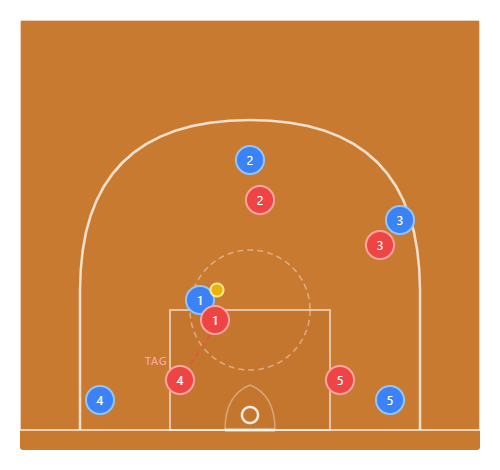
Tag the Driver: The help defender (X4) “tags” the driver by stepping into the driving lane and meeting them at the dotted circle. One hard bump or chest-to-ball contact to stop the ball — then recover to their own man.
Ball Handler
Defender
Ball
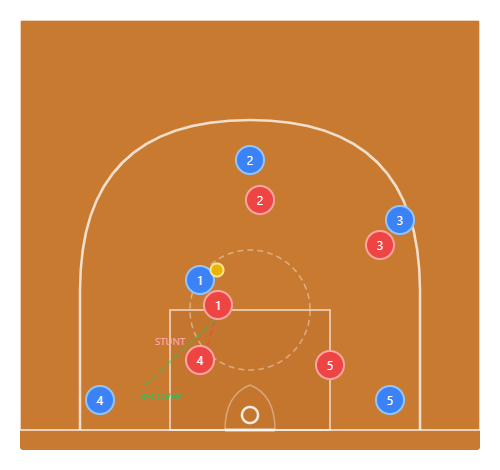
Stunt & Recover: The help defender takes one or two hard steps toward the driver (a “stunt” or “fake help”) to freeze the ball handler — then quickly recovers back to their assignment. Effective when the driver is indecisive, but risky if they’re decisive.
Ball Handler
Defender
Ball
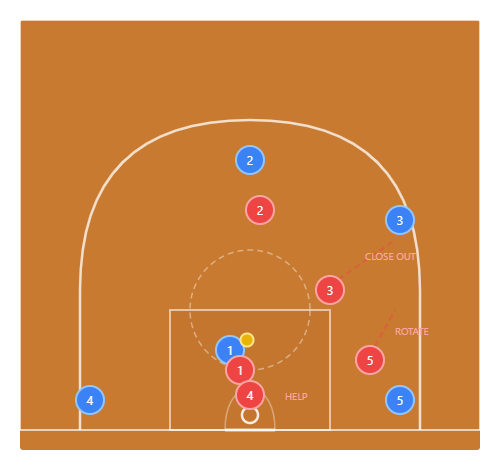
Full Rotation: When the ball gets deep into the paint, the entire defense rotates like a wheel. Help stops the ball, next man rotates down, furthest man closes out to the open perimeter player. It’s a chain — and the weakest link gives up an open shot.
Ball Handler
Defender
Ball
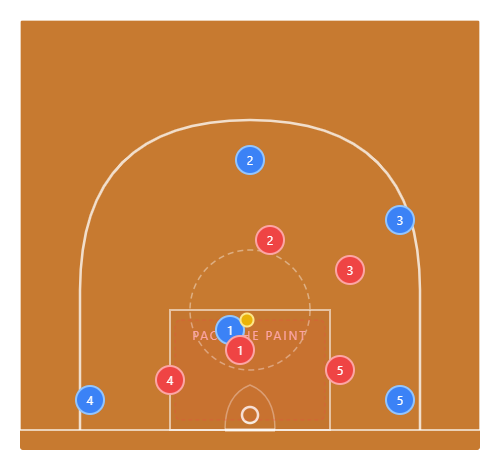
Zone-Up / Shrink the Floor: All four help defenders sag toward the paint, shrinking the driving lanes. This takes away layups but concedes open perimeter shots. Best used against poor-shooting teams or as a change of pace to disrupt rhythm.

Help = Commit

A half-hearted help is worse than no help. If you step into the lane, stop the ball. Don't be in no-man's land — you'll give up the layup AND the kick-out.

Build a Wall

The help defender's chest must be square to the driver. Sliding sideways into the lane is a foul every time. Get there early, be set, absorb contact.

Next Man Up

When the help defender commits, someone must cover their player. Rotation is a chain — every link matters. If one person is late, there's an open shot.
Game Scenarios

Common dribble-drive situations and the correct defensive response. Click each scenario.
Ball Handler
Defender
Ball

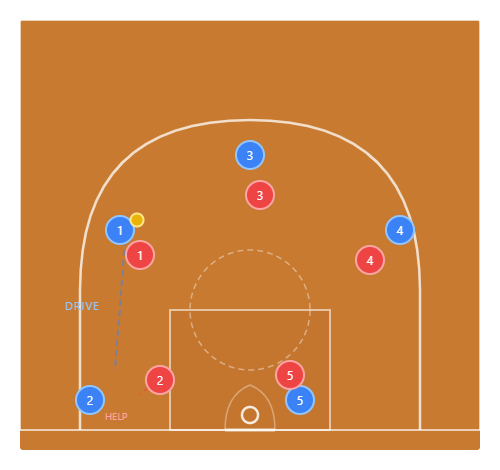
Wing Drive Baseline: The on-ball defender forces baseline. X2 is in help position and walls up at the block. X5 drops to protect the rim. If the driver kicks out to the corner, X2 must closeout while X5 covers the paint.

Ball Handler
Defender
Ball
Middle Drive: The most dangerous drive in basketball — it opens up passing lanes to both sides. X4 and X5 must “pinch” the lane simultaneously while X2 and X3 sink to take away kick-out passes. Never let the ball split the defense.
Ball Handler
Defender
Ball
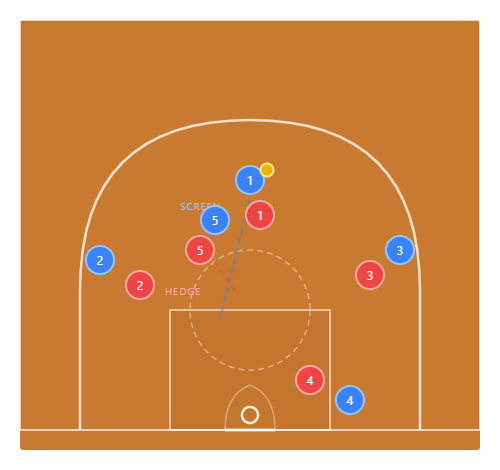
Pick & Roll Drive: The screener’s defender (X5) must “hedge” — step out and briefly slow the ball handler to give X1 time to fight over the screen. X5 then recovers to the rolling big. If the hedge is late, the driver has a free lane to the rim.
Ball Handler
Defender
Ball
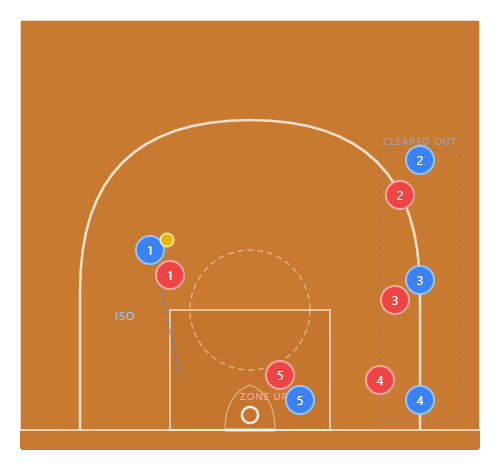
ISO Clearout: The offense clears one side of the floor to give their best player a 1-on-1. X1 must contain without fouling. X5 cheats toward the paint as a safety valve. Don’t gamble — force a tough, contested shot. Make them earn it.

Force Sideline

Most defenses prefer to force the ball handler toward the sideline and baseline — it limits their passing angles and puts the help defense in a stronger position. Never let them get to the middle of the floor uncontested.

Verticality

When a driver gets into the paint, contest with vertical arms — straight up. Jumping forward or sideways draws fouls. Verticality is a legal wall and forces tough finishes.

Practice Drills

Build the habits that stop dribble penetration. Click a drill to expand details.

By the Numbers

Why stopping dribble penetration is the most important defensive skill in the modern game.

Rim FG% (Uncontested)

~72%

Rim FG% (Contested)

~48%

Rim FG% (Blocked/Altered)

~30%

Kick-out 3PT% (Open)

~39%

Pts/Poss on Drives

~1.08

Pts/Poss Jumpers

~0.80

24-Point Gap

The difference between uncontested rim shots (~72%) and contested (~48%) is a massive 24 percentage points. A hand up at the rim changes everything.

Drive = Chaos

Drives produce ~1.08 points per possession, while contested jumpers yield ~0.80. Every drive you stop and force into a pull-up saves roughly 0.28 pts/poss — that's a 12+ point swing over a game.

Free Throw Machine

Over 60% of shooting fouls in college basketball come from dribble drives. Keeping the ball out of the paint is the #1 way to stay out of foul trouble.

Paint Touches Win

The team with more paint touches wins ~70% of D1 games. Denying penetration isn't just one play — it's the single biggest predictor of game outcomes.